
Why panels are so forgettable — and 5 panelist tips to make you memorable
EXECUTIVE OVERVIEW:

- The challenge: Panel discussions are especially vulnerable to being forgotten because speakers often share unstructured, improvised ideas;
,make too many points; and fail to reinforce the messages they want audiences to remember. - The solution: Use five memory-focused panelist strategies inspired by the Ebbinghaus Forgetting Curve: build your remarks around one rally cry, tell stories instead of lecturing, disrupt through surprise, structure answers with the Statement-Story-Significance triad and respectfully challenge conventional thinking.
- Why read this: Learn how to prepare for your next executive panel or fireside chat so your ideas are easier for audiences to process, remember and repeat long after the discussion ends.
Content not purposely designed to be remembered is easily forgotten.
If you’ve ever listened to a panel discussion and left the room wondering what you’d just learned, you know this to be true (perhaps more often than you like to admit).
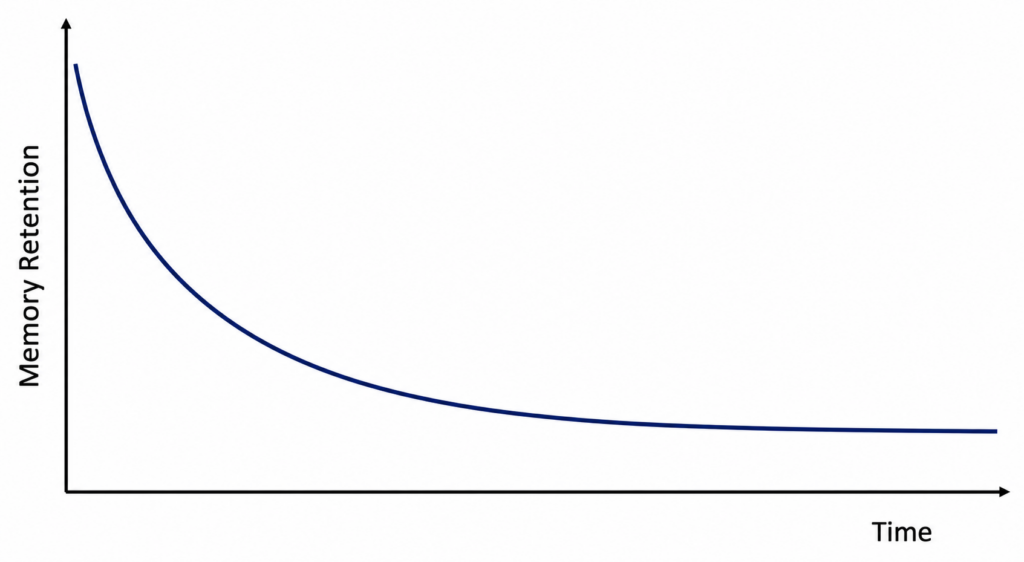
This post explains why panels are especially vulnerable to the Ebbinghaus Forgetting Curve, and shares panelist tips you can use right away, to stop your message from quickly sliding down that treacherous curve.
The worst panel discussion I ever attended — at a conference with 1,000 people in the audience — is memorable to me for all the wrong reasons:
- The panel had no purpose, structure or promise to the audience.
- The panelists went on and on, often talking over our heads and way too much about themselves.
- The moderator did not control the conversation.
Ever been there?
I remember looking around the conference ballroom that day, watching eyes roll, eyebrows rise, and heads swivel back and forth as each of us silently conveyed our disbelief to our fellow colleagues.
I also remember exactly how I felt: Frustrated (I paid money for this?) and restless (What a waste of an hour!).
While this panel remains unforgettable to me because it was so awful, the content itself was immediately forgettable.
What made it so?
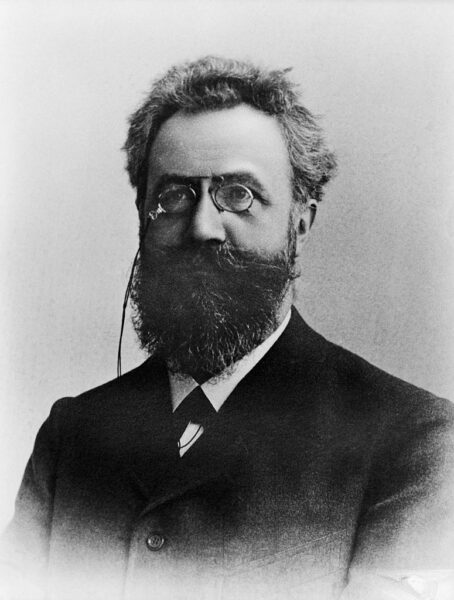
Findings by Hermann Ebbinghaus, the German experimental psychologist who invented the Ebbinghaus Forgetting Curve in 1885, explain why. He conducted experiments related to memory and learning that found:
- Forgetting happens quickly — not gradually — and follows a predictable pattern over time unless steps are taken to retain it.
- Repetition at spaced intervals resets the curve to allow for higher retention.
- Abstract, random content is forgotten faster than content that is meaningful in some way: structured, logical and personally relevant.
- People can more easily recall the first and last items in a list rather than items in the middle of a list.
- More content is forgotten the longer the time between the learning and a review.
Because of the Forgetting Curve, panels are risky business.
After all:
- Points made during panels are typically conversational, random, improvised — and sometimes unpredictable if discussions go in a different direction, and value to the audience is not assured.
- A key point made during a panel is rarely repeated throughout; instead, panelists often strive to make as many points as possible to ensure their voice on the panel is heard.
- Remarks tend to be fluid from panelist to panelist, left up to chance, and not always structured, logical or personally relevant to the audience.
- Any takeaways shared along the way are rarely reviewed toward the end to add retention.
Despite all this friction:
Conferences today continue to (over)fill their agendas with more panels, under the guise of authenticity, casual conversation and the inclusion of multiple voices, and with the (false) promise to panelists of swift prep time.
But unfortunately for all of us:
Way too many panels today leave audiences feeling bored, underwhelmed, disappointed — cheated out of a communal experience and lasting value — because what is shared is often immediately forgettable.
When audiences are asked to recall takeaways from a panel, quite often they just can’t do it.
So what can we do about this?
If you are speaking on a panel soon, here are five panelist tips — smart ways to beat the Forgetting Curve — to help ensure that what you say is not forgotten after you leave the stage.
Panelist tip 1 – Have a rally cry

Come to the panel with a solitary message: one that will change the way your audience thinks or behaves. Then organize and rehearse your material — your answers to the questions the moderator will ask — around that solitary message so you stand out in a good way on stage.
(And if you rehearse, there’s a bonus: Your material will be encoded in your own brain, so you’ll be able to deliver well even if you feel a little under pressure on stage.)
Be intentional about repeating your solitary message throughout your answers to help the audience recall it later.
Why Ebbinghaus would approve: Unstructured, unfocused, largely improvised thoughts that are “all over the place” are not memorable. When it comes to memory: organization and discipline matter. Spaced repetition — restating and reinforcing a message — is the primary antidote to forgetting, Ebbinghaus found.
Be the panelist who shares — and repeats — a solitary message.
Panelist tip 2 – Dump the soapbox
Too many panelists hop on a soapbox when it’s their turn to answer a question. They lecture, preach, opine, advise.
Resist this temptation, because just like a regular keynote, a panel discussion is not about you. It’s about your audience.
Instead of lecturing, choose instead to engage and entertain by grounding every one of your answers in a story — linked to your solitary message — with a beginning, middle and end. Cover (with a dose of drama) the essentials — character(s), scene, problem and resolution — and always end by making a point (don’t leave it up to the audience to connect the dots).
Why Ebbinghaus would approve: Stories, told well, are unforgettable because they leave a specific “memory trace”: an actual imprint or encoding in our brains. Because abstract ideas don’t do that, they more quickly follow the downward slope of the Forgetting Curve and fall away.
Be the panelist who tells stories.
Panelist tip 3 – Disrupt through surprise

Be intentional about incorporating into at least one of your answers an astonishing statistic: a single, specific number that the audience does not expect to hear.
For example:
- “Shakespeare popularized more than 1,700 English words — including common words like ‘obscene’ and ‘rant.’”
- “The average cloud weighs more than 1 million pounds.”
- “About 25% of the bones in your body are in your feet.”
Each specific number is memorable because it is surprising.
What astonishing statistic can you share that’s related to your solitary message?
Why Ebbinghaus would approve: A specific, surprising number — unlike general mentions such as “a significant percentage” or “a large majority of” — sticks because it disrupts. It’s new and different, invoking in the brain a “novelty response”: another opportunity for the brain to encode it for the future versus set it aside.
Be the panelist who delights through surprise.
Panelist tip 4 – Apply the Statement-Story-Significance triad
Organized answers are a boon to panelists because they take less time to say and maximize your precious moments on stage. Plus, they can pack an unforgettable punch.
So what’s the best way to organize your answers?
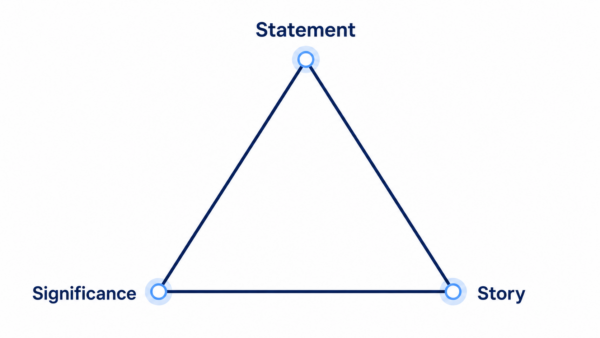
Apply the Statement-Story-Significance Triad:
- Statement: Make a clear claim
- Story: Support your statement with a quick story in the classic format: character(s), scene, problem, resolution, point
- Significance: Share the “so what” takeaway — why it matters
Here’s an example:
- Statement: “Leaders who wing it sound weak.”
- Story: “Last year John, a COO client of mine with 30 years of experience, said yes to a high-profile panel since he knew dozens of potential customers would be in that room. But John ran out of time to prepare. On stage, when the moderator asked him, “What’s the biggest challenge facing the industry right now?” John bounced from supply chain, to workforce, to technology and back again. His answer was confusing — and completely forgettable.”
- Significance: “Unfortunately, John learned the hard way that preparation is power — especially on a panel.”
Why Ebbinghaus would approve: Our working memory can’t hold an unlimited number of thoughts or items. Framing your answer in an organized manner by addressing just three elements — Statement-Story-Significance — makes your message easier to process and remember.
Be the panelist who relies on the Rule of Three.
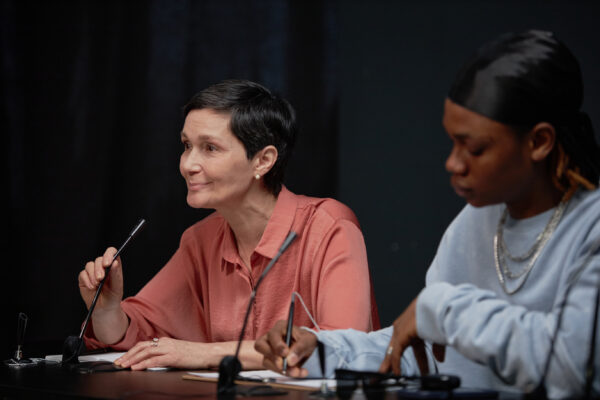
Panelist tip 5 – Stop nodding and be (just a little) contrarian.
Panelists who agree on everything are forgettable. To be memorable, look for an opening or angle that you truly view much differently than a fellow panelist. Then speak up: respectfully and kindly, but clearly. For example, you can say:
- “I’ve had just the opposite experience … ”
- “That solution has never worked for us, and here’s why …”
- “Can I share a completely different take on that issue?”
Why Ebbinghaus would approve: A bit of conflict like this evokes attention and arouses emotion, turning your point into meaningful material, which the brain is more likely to encode and retain because it stands out. Sameness — communicated via bland agreement on stage — is emotionally neutral and thus forgotten faster.
Be the panelist who (gently) pushes back.
Don’t be ‘that panelist’ who’s immediately forgettable

The next time you’re invited to speak on a panel, keep the Forgetting Curve top-of-mind (so you don’t find your message quickly sliding down it).
Know that you can steer the conversation in unforgettable ways if you remember these five panelist tips:
- Have a rally cry
- Dump the soapbox
- Disrupt through surprise
- Apply the Statement-Story-Significance triad
- Stop nodding — and be (just a little) contrarian
When you do, you may well find yourself standing far above your other panelists as the voice in the room that nobody forgets: memorable for all the right reasons.