
Learn from women leaders: Shonda Rhimes has 3 lessons for panelists, guests at fireside chats
EXECUTIVE OVERVIEW:
- The challenge: Most executive panels and fireside chats fall flat because speakers rely on corporate buzzwords, generic advice, and safe, rehearsed answers.
- The solution: TV producer and screenwriter Shonda Rhimes demonstrates how executives can captivate audiences by using unfiltered language, personal vulnerability and counterintuitive perspectives.
- Why read this: Learn three actionable speaking strategies from a master storyteller to transform your next high-stakes panel or fireside chat from forgettable to memorable.
Most remarks from panelists and guests at fireside chats are formulaic, safe — and instantly forgettable.
But master storyteller Shonda Rhimes recently showed how women leaders and other speakers can be memorable when they trade safe, familiar answers for blunt language, personal vulnerability and an unexpected point of view.
Read on for three smart moves from Rhimes — and practical lessons for people who want to bring more candor, surprise and storytelling power to their next panel or fireside chat.
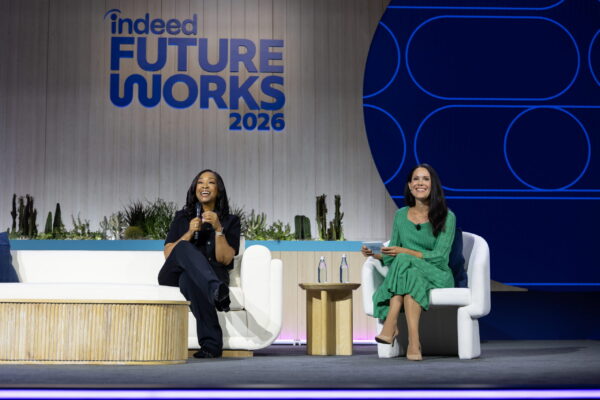
Shonda Rhimes bypassed convention and eschewed polished abstractions during her fireside chat Sept. 2 at Indeed FutureWorks 2026, a global conference for HR leaders.
Her session, “Beyond the Script: Shonda Rhimes on Storytelling, Ambition and Leading with Purpose,” promised leaders a frank conversation about the intersection of creative ambition and authentic leadership.
Instead of sharing predictable leadership lessons and heard-it-before advice — like “culture matters,” and “difficult people need coaching” and “find a mentor” — Rhimes delivered candid, sticky views that disrupted our thinking.
In a fireside chat, that’s rare.
And pure genius.
Rhimes, of course, is the master storyteller behind such hit TV dramas as “Grey’s Anatomy” (nope, I haven’t missed a single episode in 22 seasons!), “Private Practice” and “Scandal” on ABC. Under her Netflix deal, Rhimes helped turn “Bridgerton” into a global franchise. Founder of the production company Shondaland, Rhimes is also a Television Academy Hall of Fame inductee, three-time TIME 100 honoree and New York Times bestselling author.
When I heard weeks ago that Rhimes was a conference headliner at Indeed FutureWorks, I wanted to be in that virtual room with women leaders and other HR pros: not only to hear what she had to stay — but more importantly, how she chose to say it.
Here are three examples and corresponding lessons from that fireside chat:
1 – No hiding behind weasel words
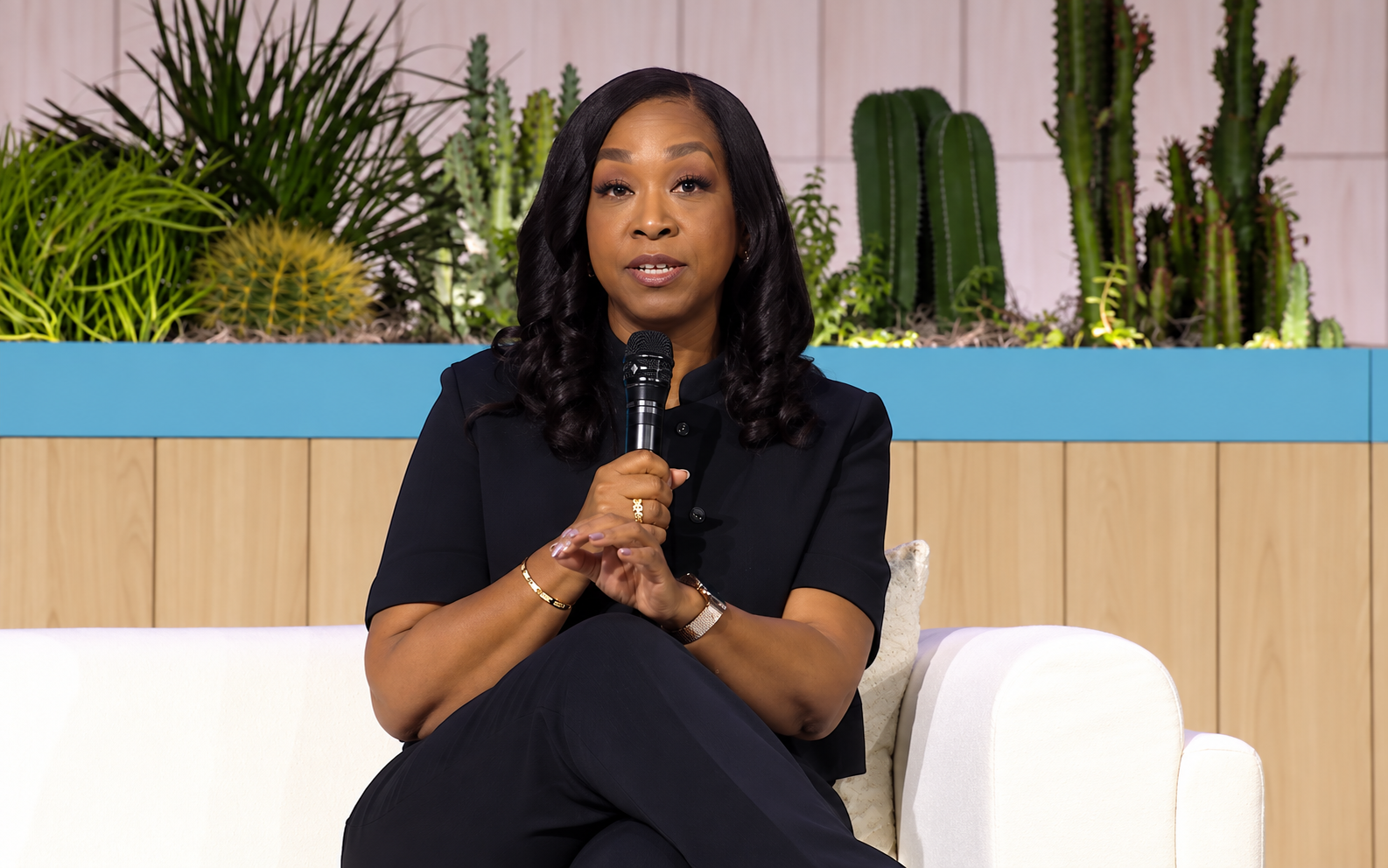
HOST (Maggie Hulce, chief revenue officer, Indeed):
“You’ve also talked … about the profound impact of surrounding yourself with the right people. So when you’re thinking about casting a new series or assembling a writer’s room, are there specific qualities or mindsets that you’re looking for?”
RHIMES:
“Casting a series and assembling a writer’s room are two very different things because you’re looking for two different things …
“And can I swear a little bit here?
“We have a very clear, established-early-on, no a**hole policy at Shondaland. … It’s important.
“So when I’m casting for an actor, and I find somebody I like, three separate people from three separate environments have to tell me that person is not an a**hole in order for them to get hired.
“It’s really important. Sometimes you’ll find one person — not a good idea. Three separate people, three separate environments.”
THE LESSON:
Rhimes did not default to tired phrases like “culture fit,” “values alignment” or “interpersonal skills.”
Yawn.
She skirted simple sentiment and instead served up the strict test supporting her “no a**hole policy”: confirmation from “three separate people, three separate environments.”
Instead of hiding behind weasel words, Rhimes gave memorable, actionable advice to women leaders and others.
2 – No hypotheticals
HULCE:
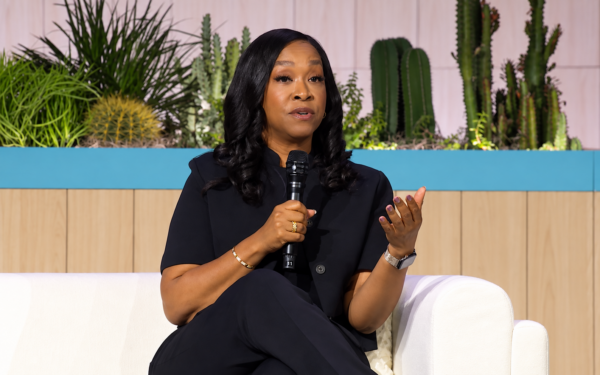
“In (your book) ‘Year of Yes,’ you were also very candid about the importance of identifying the vampires in our lives — the people who actually can drain us, drain our energy and create toxic dynamics — and figuring out how to set boundaries. …
“What advice would you give HR leaders dealing with very high-performing individuals whose output is exceptional, but whose behavior is in that gray (area) of running a little bit counter to company culture?”
RHIMES:
“I was that person when I first started out.
“I was that high-performing individual who was a pain in the butt for everybody else — and it wasn’t great.
“I think for me, a lot of that became about realizing that you have to be open to feedback and finding people who are open to feedback.
“Because honestly?
“You can be amazing. But if you can’t work with everybody — if you can’t assimilate into the culture at least a little bit — it’s never going to work.
“And I certainly couldn’t do it leading from the top in that way.”
THE LESSON:
When talking about star performers at work who create toxic dynamics and damage the culture, Rhimes was authentic, vulnerable and brave when she used herself as the example — not some nameless, faceless Shondaland employee.
Then, she called out that toxic behavior as intolerable — “it’s never going to work” unless you are “open to feedback” — no matter how exceptional the employee.
I’d expect no less from this master storyteller, who put herself in the story as the flawed protagonist: the “difficult” high performer.
No hypotheticals is another memorable move — more credible and disruptive than simply telling women leaders and others to “give and receive feedback” to star performers whose behavior threatens company culture.
3 – No defaulting to expected norms
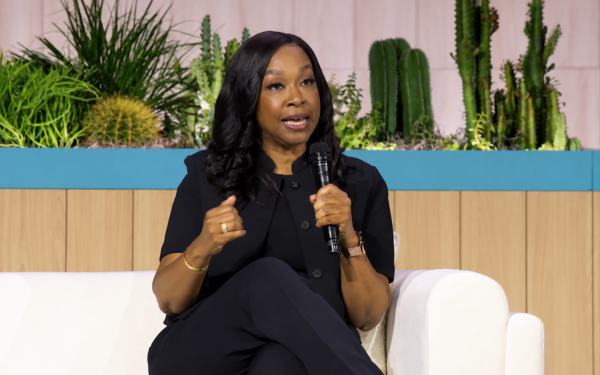
HULCE:
“Another hallmark of your work is wonderful mentor-mentee relationships, like Miranda Bailey in ‘Grey’s Anatomy’ shaping young interns into top surgeons. …
“Was there a mentor for you that was — I’m sure there’s been many! — but one that was particularly important?”
RHIMES:
“I’m going to say something that probably sounds crazy, but … I was the first woman of color, Black woman … probably one of the few women who ran their own show their first time out.
“So I didn’t really have anybody to speak to about what happens when you have never written television before — and then you write ‘Grey’s Anatomy’ — and it’s a hit.
“I felt like you don’t necessarily have to have ‘a person,’ because a lot of people think, ‘I can’t do this without an actual person to mentor me.’
“I spent a lot of time reading biographies and memoirs of people who I really admired and taking all the lessons I could from there.
“So I was ‘mentored’ by everybody from Andre Agassi to Oprah Winfrey to Michelle Obama — all these different people! — simply because I really took in what they were saying in their books and really thought about how to apply it to my own life. …
“So many people think you need a mentor to give you permission to do (hard) things. I think you CAN do those things — and if you’re lucky enough to find a mentor, then you can absolutely soar.
“But I don’t think that we need to make people feel like if they DON’T have a mentor, they cannot succeed.”
THE LESSON:
Default thinking says there is always One Indispensable Mentor behind every successful leader (and let’s hear who it is).
Rhimes discards that default when she admits she had no face-to-face mentor — and succeeded spectacularly despite that by building her own council of mentors through biographies and memoirs and then applying those lessons to her life.
(What?)
Mentors can be powerful, Rhimes says, but are not a condition of success.
And she is the proof.
By refusing to default to expected norms, Rhimes challenged conventional wisdom and reframed the possibilities for women leaders and others — which made her answer memorable.
What does all this mean for you as a panelist or guest at a fireside chat?
Let’s be honest: All too often, panels and fireside chats in business dissolve into predictable leadership lessons and heard-it-before advice.
But it doesn’t have to be that way.
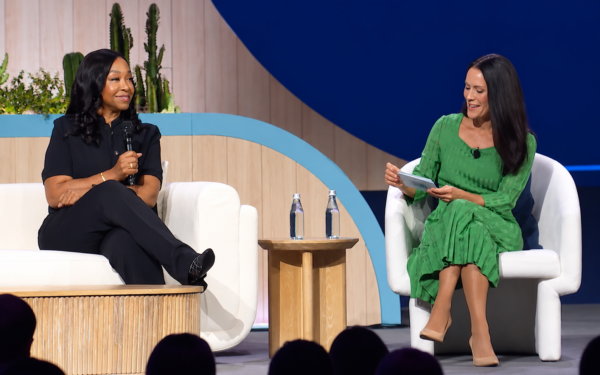
Before Shonda Rhimes walked onto the stage at Indeed FutureWorks, she knew exactly what she wanted to say to this audience.
And she’d thought long and hard about how she wanted to say it.
When you’re preparing as a panelist or guest at a fireside chat, do you do the same?
Or do you:
- Hide behind weasel words?
- Rely on hypotheticals?
- Default to expected norms?
If so, resolve to do better.
Take a few lessons from Shonda Rhimes, the master storyteller, and make what you say — and how you say it — a bit disruptive.
Be actionable. Vulnerable. Unpredictable.
Be colorful and delightful!
And in the end?
Be memorable.
Do you need help ensuring your remarks on a panel or fireside chat will resonate?
Contact Teresa Zumwald: a 21-time winner of the Cicero Speechwriting Awards who delivers custom speechwriting services, plus executive speech coaching, executive communication, and speaking and training.